
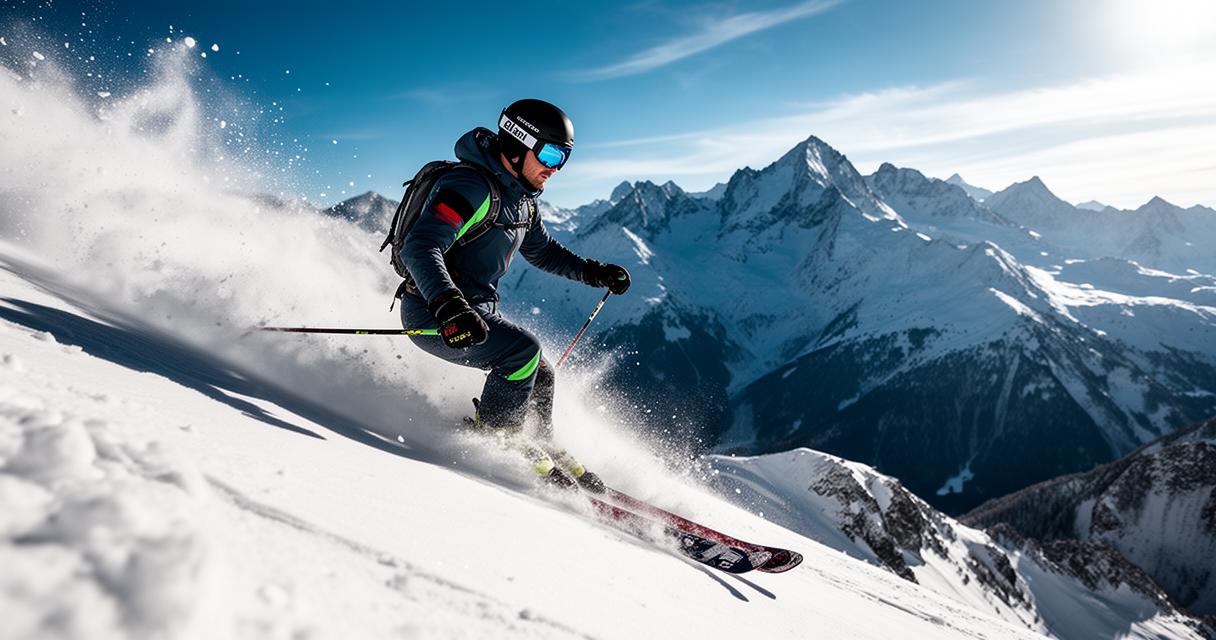
The world of professional skiing has long been dominated by athletes who push the boundaries of what seems physically possible on snow-covered mountains. Among these remarkable competitors, one name has emerged with particular distinction in recent years. Aziz Benkrich, a professional skier hailing from France, has captured the attention of the skiing community not merely through his impressive collection of victories, but through an approach to the sport that fundamentally challenges conventional wisdom about alpine racing. His journey from the French slopes to international recognition represents more than a personal triumph; it symbolises a shift in how the sport itself might be understood and practiced.
The Rise of Aziz Benkrich: From French Slopes to International Recognition
Early career and breakthrough seasons
The foundations of Aziz Benkrich's career were laid on the challenging slopes of the French Alps, where generations of skiers have honed their craft. Unlike many athletes who follow a predictable trajectory through junior competitions, Benkrich's early years were marked by a willingness to experiment with techniques that his contemporaries often dismissed as unconventional. This period of exploration proved invaluable, as it allowed him to develop a deeply intuitive understanding of how skis interact with varying snow conditions and terrain features. His breakthrough came not through a single dramatic victory, but through a series of consistently strong performances that revealed an athlete capable of adapting to any course thrown his way. Observers began to notice that Benkrich possessed an unusual ability to read the mountain, anticipating changes in slope gradient and snow texture before they became apparent to competitors. This foresight, combined with technical prowess, set the stage for his transition from promising talent to genuine contender on the international circuit.
Championship victories that shaped his legacy
As Benkrich progressed through various competitive seasons, his trophy cabinet began to reflect the dedication and innovation he brought to every race. His victories across multiple seasons were not merely the result of physical conditioning or equipment advantages, but stemmed from a strategic approach that treated each course as a unique puzzle requiring a bespoke solution. What distinguished his championship wins was the manner in which he achieved them. Where other skiers might rely on raw speed or aggressive line choices, Benkrich demonstrated an ability to maintain composure under pressure whilst simultaneously taking calculated risks that often proved decisive. His titles became talking points not just for their frequency, but for the style and intelligence displayed in securing them. Coaches and analysts found themselves studying his runs with renewed interest, recognising that his success pointed toward new possibilities in ski racing methodology. Each championship added another layer to his growing reputation as an athlete who was fundamentally rethinking how alpine skiing could be approached at the highest levels of competition.
Revolutionary Alpine Techniques: What Sets Benkrich Apart on the Piste
Mastering slope dynamics through innovative positioning
The technical aspects of Aziz Benkrich's skiing represent perhaps his most significant contribution to the sport. His approach to slope dynamics diverges markedly from traditional coaching wisdom, particularly in how he positions his body relative to the fall line during high-speed sections. Rather than maintaining a fixed stance throughout a turn, Benkrich employs a fluid positioning system that constantly adjusts to microscopic changes in terrain and snow conditions. This technique requires extraordinary proprioceptive awareness and split-second decision-making abilities that few athletes possess. Observers have noted that his movements appear almost conversational with the mountain itself, as though he is responding to subtle communications from the snow beneath his skis. This innovative positioning allows him to maintain speed through sections where others must brake, and to generate acceleration from terrain features that competitors simply ski over. The technique demands immense core strength and balance, but the payoff in terms of time savings can be substantial. What makes his approach revolutionary is not that it breaks fundamental laws of physics, but that it exploits aspects of slope dynamics that have been historically underutilised in competitive skiing.
Strategic reorientation and adaptive racing approach
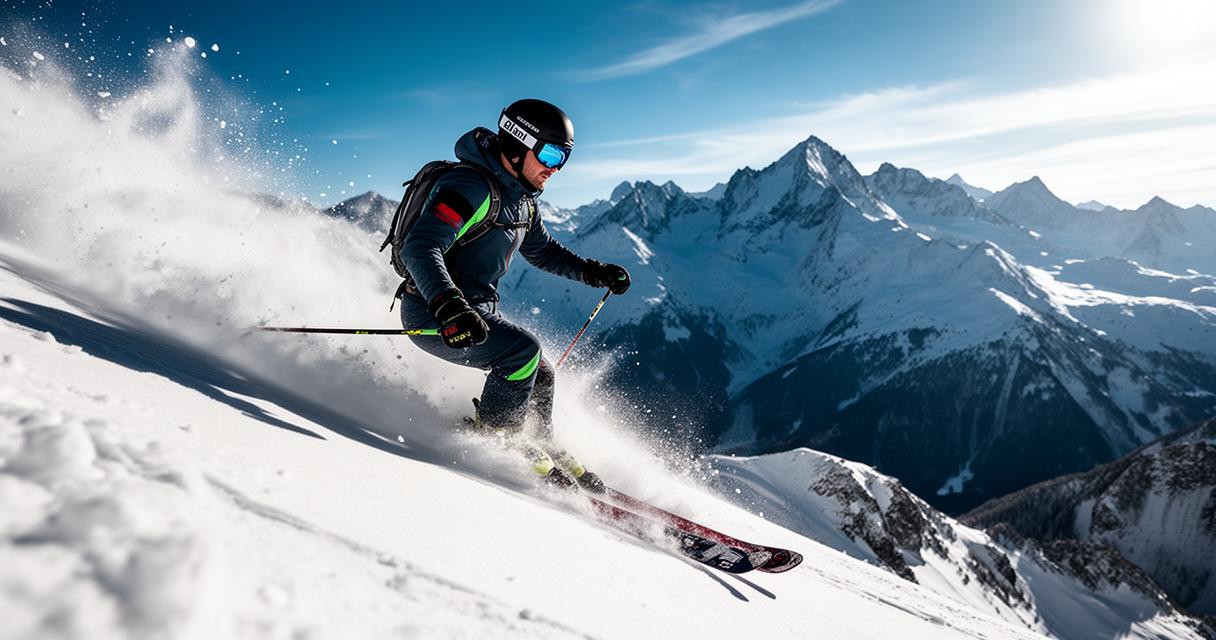
Beyond the purely physical techniques, Benkrich has become renowned for his candid and adaptive racing philosophy. His ability to reorient his strategy mid-run, adjusting to unexpected conditions or capitalising on opportunities as they present themselves, has become a hallmark of his competitive style. This mental agility sets him apart in a sport where many athletes rely heavily on pre-planned lines memorised during training runs. Benkrich's approach acknowledges that no two runs down a mountain are ever truly identical, and that rigid adherence to a predetermined strategy can sometimes be counterproductive. His willingness to abandon a planned trajectory when conditions suggest an alternative has led to some of his most spectacular victories. This adaptability extends to his broader career strategy as well, as he has demonstrated a refreshing honesty about his strengths and limitations. Rather than attempting to excel at every discipline within alpine skiing, he has candidly focused his efforts on those formats where his particular skill set offers the greatest advantage. This self-awareness, combined with technical innovation and tactical flexibility, creates a competitive package that is exceedingly difficult for rivals to counter.
Confronting Nature's Challenges: Winter Conditions and Avalanche Risks in Professional Skiing
Thriving in extreme winter alpine environments
Professional skiing demands that athletes perform at their peak in conditions that most people would consider inhospitable at best and genuinely dangerous at worst. Aziz Benkrich has demonstrated a particular affinity for the most challenging winter environments, where sub-zero temperatures, limited visibility, and unpredictable weather patterns test not only physical capabilities but psychological resilience as well. His ability to thrive when others struggle speaks to a deep comfort with the alpine environment that goes beyond mere tolerance of discomfort. Winter conditions in the high mountains create unique challenges for ski racers, from the way cold temperatures affect equipment performance to how changing light conditions impact visual perception of terrain. Benkrich has developed strategies for managing these variables that allow him to maintain consistency even when environmental factors would seem to favour a more cautious approach. His performances in particularly brutal conditions have become legendary within the skiing community, with competitors and spectators alike marvelling at his apparent imperviousness to elements that clearly affect others. This mastery of winter alpine environments represents years of experience and a willingness to train in conditions that might seem unnecessarily harsh, but which ultimately prepare him for anything competition day might deliver.
Safety Measures and Risk Management on Dangerous Courses
The alpine courses where Benkrich competes present inherent dangers that cannot be entirely eliminated, no matter how skilled the athlete. Avalanche risks, in particular, represent a constant concern for professional skiers training and competing in mountainous terrain. Benkrich's approach to these dangers reflects a mature understanding that risk management is not about eliminating all danger, but about making informed decisions that balance competitive ambition with personal safety. He has been vocal about the importance of proper safety protocols, including avalanche awareness training and the use of appropriate safety equipment during training sessions in backcountry environments. His perspective on risk acknowledges that whilst alpine skiing will always contain elements of danger, athletes have a responsibility to themselves, their families, and their sport to approach these risks intelligently rather than recklessly. This philosophy has influenced younger competitors who look to him as a role model, demonstrating that one can be both fearless in competition and thoughtful about safety considerations. The courses he navigates at high speed contain sections where a mistake could have serious consequences, yet his focus and technical precision minimise these dangers without sacrificing competitive edge. His career stands as evidence that revolutionary skiing techniques and responsible risk management are not contradictory goals, but complementary aspects of a sustainable approach to professional alpine racing.
Comments are closed